
Wildfire Insurance Is Changing: Why Your Neighborhood May Matter as Much as Your Home
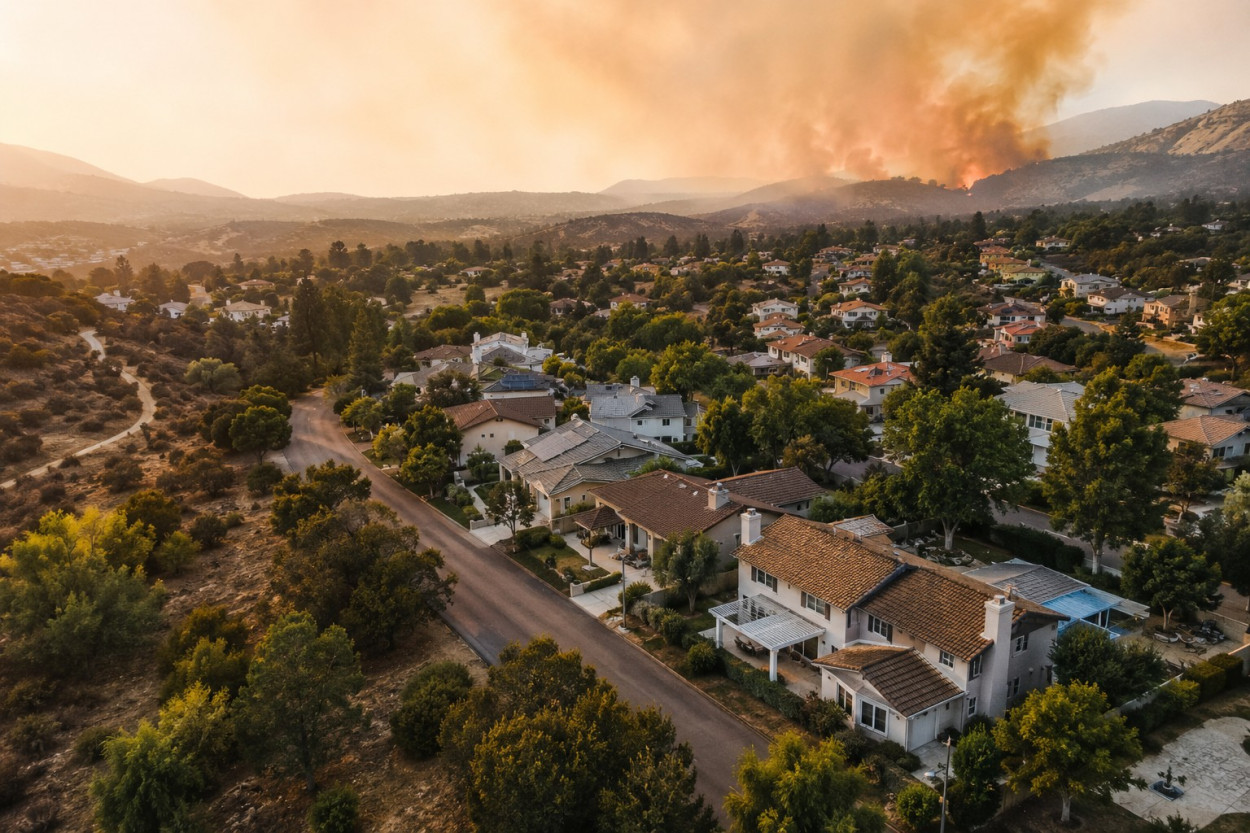
For years, homeowners have been encouraged to make their properties safer from wildfire by maintaining defensible space, clearing vegetation and making improvements that can help prevent flames and embers from reaching their homes. Those steps remain extremely important.
But there is another factor that is becoming increasingly important when insurance companies evaluate wildfire risk: the neighborhood surrounding your home.
The insurance industry is beginning to recognize something that wildfire experts have understood for years—wildfires don’t stop at property lines. A home can be well-maintained and carefully hardened against wildfire, but it may still be exposed if surrounding homes, vegetation and other structures are highly vulnerable.
Wildfire Risk Is More Than an Individual Home
Traditional insurance underwriting has often focused heavily on the characteristics of an individual property. What is the home made of? How old is the roof? How close is it to vegetation? Does it have defensible space?
Those questions are still important. However, wildfire behaves differently from many other types of property risks.
During a major wildfire, burning embers can travel significant distances and ignite vegetation, fences, decks, roofs and other structures. Once one home catches fire, nearby homes can become exposed to additional heat, flames and embers.
That means a neighborhood where many homes have taken steps to reduce wildfire risk may be substantially safer than a neighborhood where only a handful of homeowners have done so.
This is why insurers are increasingly looking at wildfire mitigation on a block-by-block and neighborhood-by-neighborhood basis, rather than viewing every property as completely separate from the properties around it.
What Can Homeowners Do?
The good news is that homeowners are not powerless.
California’s Safer from Wildfires program recognizes numerous steps property owners can take to reduce wildfire exposure and potentially qualify for insurance discounts. These measures include maintaining defensible space, installing a Class A fire-rated roof, using ember-resistant vents, upgrading windows, enclosing vulnerable eaves and creating an ember-resistant zone immediately around the home.
Even relatively simple improvements can make a difference. Keeping leaves, pine needles, dead vegetation and other combustible materials away from the structure can reduce opportunities for wind-blown embers to ignite the property.
Other improvements can be more substantial and expensive, such as replacing roofing or siding, upgrading windows or making structural changes designed to better withstand wildfire conditions.
But individual improvements are only part of the equation.
Why Community Mitigation Matters
A neighborhood where homeowners work together to reduce wildfire hazards can provide greater protection than isolated improvements on individual properties.
California’s wildfire safety framework recognizes community-level programs, including Firewise USA and other fire-risk reduction communities. These programs encourage residents and local organizations to work together to identify hazards and develop plans to make their communities more resilient.
This approach is especially important in areas where homes are located close together or where a wildfire could move rapidly from one property to another.
In other words, your neighbor’s property can affect your wildfire risk—and your property can affect theirs.
What Does This Mean for Insurance?
California’s insurance market continues to evolve as insurers attempt to better understand and price wildfire exposure. At the same time, the state is working to encourage insurers to return to and expand their presence in wildfire-distressed areas. Recent filings and regulatory changes have already resulted in some insurers seeking to expand coverage in areas that have historically been difficult to insure.
Modern wildfire catastrophe models are also becoming an increasingly important part of the process. California is developing a public wildfire catastrophe model designed to provide better information about future wildfire losses, risk reduction and community resilience.
For homeowners, this means that insurance decisions may increasingly depend on a combination of factors—including the property’s characteristics, its location, surrounding conditions and the mitigation efforts taking place throughout the community.
Don’t Wait Until You Have an Insurance Problem
Wildfire risk is not something California homeowners can afford to think about only when their insurance policy is up for renewal.
If you have made improvements to your home that could reduce wildfire risk, make sure your insurance agent knows about them. Your agent can help determine whether those improvements may qualify for available discounts or affect your coverage options.
It is also a good idea to review your policy regularly to make sure your dwelling coverage, personal property coverage and other limits are appropriate. Rebuilding costs can change significantly over time, and being properly insured is especially important in a high-risk environment.
At Morning Star Agency Insurance Services, we understand that insurance is about much more than simply finding a policy. We help individuals, families, property owners and businesses navigate an insurance market that continues to change.
Whether you need homeowners insurance, fire insurance, auto insurance, renters insurance, umbrella insurance, commercial property insurance, commercial auto insurance, workers’ compensation, business insurance or other personal and commercial coverage, we’re here to help.
Wildfire risk is changing—and so is the insurance market. Don’t wait until you have a problem to review your coverage. Contact Morning Star Agency Insurance Services today and let us help you find the insurance protection that’s right for you, your family and your business.